Hal's Trip To Tbilisi


UBAnnotated.com and UBTheNews Founder Halbert Katzen joins us to discuss his recent trip to Tbilisi, Georgia to speak to people about the Urantia Book.
Katzen was invited to present his findings on Microcephalic gene research, and how his findings -and new recent developments - corroborate Urantia Book teachings on early human evolution.
0:14 And I'm happy to have on back on the program Albert Katzen. He is the author, creator, founder of You Be the News and also You be annotated.com. Welcome back. How are you, Albert? Doing good. Thanks for having me, Jim. We had you on a couple of months ago and you were telling us about your upcoming trip to Georgia. And I'm not talking about Atlanta, I'm talking about Georgia and Asia. Tell us about what inspired you to want to go to the country of Georgia. Well, the big inspiration was being invited to visit Georgia. For the last 10 years, I've been having Zoom conversations with a woman named Marina Gigi Ashvili, who learned about my work on the Internet and got in touch.
1:05 And she's been the sole Urantia book reader in Georgia for like decades. And then about a year or so ago, she found one other Georgian who was willing to take an interest in the book, and he's taking a very powerful interest in it. His name's Shota, and he's read through it once and listened through it twice in the last year or so. So he's obviously pretty enthusiastic. And I've been learning about Georgia through Marina for years now and it's an incredibly interesting country, both in a contemporary sense and it and historical sense, and also in a Eurasia book specific context. It's really quite at the crossroads of the birth of humanity and, and all of the major epics and and rebellions and defaults and all of it.
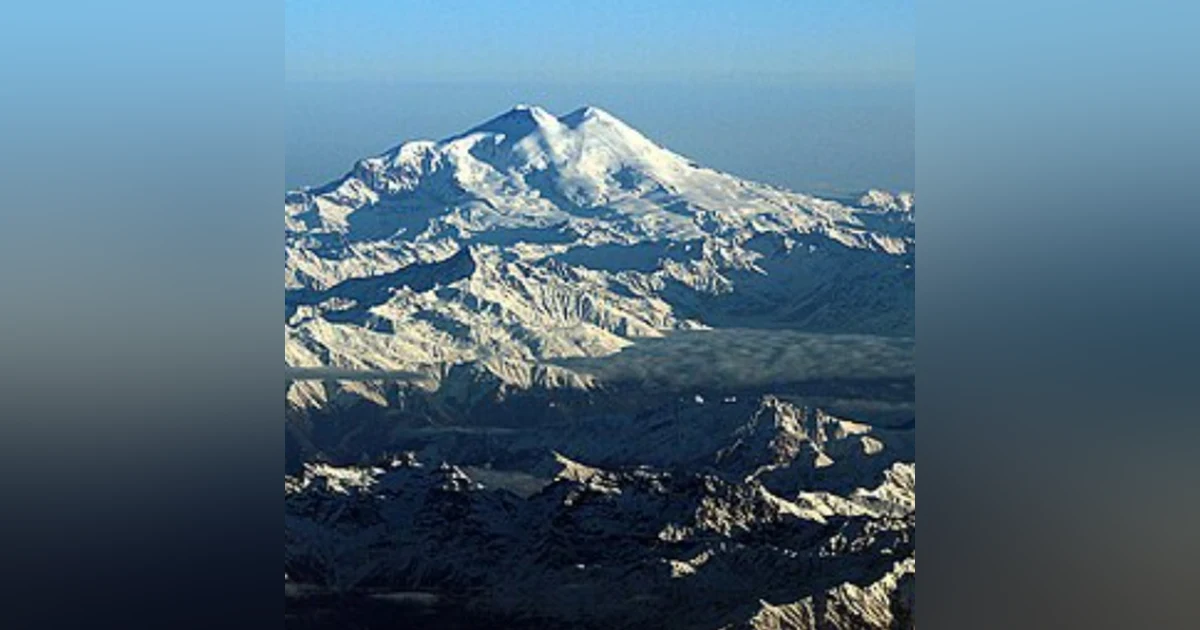
2:10 So because the Caucasus Mountains are its northern border and it creates the barrier between the Black Sea and the Caspian Sea, it's created a little bottleneck there of humanity, because you could go either E into the Orient or and go West up into Europe or South into Africa and the Mideast. But the Caucasus Mountains sort of stop the direct northerly route. And so for that reason, it, you know, created a certain kind of gene pool and history. This is the area where the mighty men of old were hanging out, and this is the area of Lake Van. And there's numerous lakes that have the word Van embedded in them in that area.
3:11 They definitely have preserved that name in their history, even though they don't understand it well. But I would mention at this point, one of the things I've learned recently is that they found underwater megalithic architecture in Lake Van. It's like 85 feet deep. And they came to realize that this got buried under the water because of the volcano that exploded about 12,000 years ago and shut off the outlet to the lake.
3:51 So that of course, caused the water to rise and for the architecture to get flooded. And because you're able to date that pretty readily in terms of when the volcano blew, they've got a date for that megaphythic architecture that as old as Gobekli Cafe and much more refined in its nature. There's this whole wooden, wooden is rather stone tower where where you've got, you know, perfectly huge stone that you don't need any mortar between them. And it's just incredible. Apparently these are the deepest monoliths, you know, submerged of all the ones around the world. Other ones tend to be closer to the shore because of just experiencing shoreline changes.
4:44 But this was a more dramatic geological event, you know, in relationship to the lake. So it got submerged a lot more. OK. So a couple of things. I'll just have a couple questions on on what we've what you've said so far. And I want to get to the part where you gave your presentation and what you covered there. So for those who don't know or or or perhaps might not know, Lake Van was named after one of the 100 of the planetary Prince's staff, Calagasia. And so for much of the world, not that many people I can think of know that Lake Van was actually named and goes back hundreds of thousands of years.
5:30 And Van played a a role, couple of important roles #1 he established a, a civilization or a Cultural Center in that region of Lake Van, which bears his name. And I'm not sure that people in the world really have ever made a connection of where exactly the name came from. I mean, outside of the Urantia book, is there any literature that explains where the name came from? I think they do have some traditions. They're related to the name, but I couldn't expound on them. OK, obviously it's not lost on them that they're using that word and that that syllable is meaningful to them, but I, I couldn't really give you the the stories.
6:14 And then, of course, on the point of that region, the Nodites went through that area, the Adamites, the Blue Man, obviously, when again, based on the Urantia narrative, the the Sangit Graces that went to Europe, notably the Blue and even the Andonites before them would have travelled that area. So when how how says that it's heavily travelled. It is a historically, it's the cradle, it's the passageway of the cradle of civilization to all of Europe and Asia. So one can imagine the rich culture. It's probably one of the most, the oldest establishments for civilization on the planet. Is is that a fair statement?
6:59 Well, yes, I think so. And, and one of the things I needed to do for the presentation, of course, was to create some slides to give some visuals in an effort to help people put all of this history together in their minds as quickly as possible so that I could get on to some of the specific reports. And so I did end up creating a slide of the greater Mesopotamia area, you know, that extends to the Sowalik hills in northern India and and captures that whole expanse of where the Andonites started out, the first human beings, where the colored races, the Sangux emerged further to the West. And then how the rebellion, the Lucifer rebellion created the Novites and, and that led to Van and the Garden of Eden. And you know, all of that is in the same area, generally speaking.
8:03 And the slide presentation I'll just mention now currently at the bottom of the Gobekli Tepe web page on you be annotated, there is a link to that. And also recently I just got a video of the presentation posted. Of course, it's a little bit more Georgian friendly than for people who speak English because it's all being translated into Georgian. But hopefully I'll get another presentation done just in English, you know, and, and get all of this presented that way for our English speaking audience. But you know, that was an actual thing to do. And, and people can go and also the quick links for that on my sub stack.
8:54 If you go to the UV, the news sub stack or Halbert Katz and either one of those searches will get you to it. That'll also provide links to both the presentation and PDF of the slides. So that being said, excuse me, happy to report we had about 30 people show up at the Georgia's National Library in Tbilisi. They had a beautiful room there to accommodate us with all the technology we needed readily available. And so the presentation went on for about two hours almost. We had a little time for questions at the end, but with all that translating that needed to be done, we were just barely getting through it.
9:50 One of the things that was especially special about giving the presentation, which I haven't given for 10 years now, is that we've got new research related to Adam and Eve's genetics. The very first UV the news report turned out to be this one. And it concerns genetics research done by a very renowned geneticist named Bruce Law. And this was in the early 2000s out of the the Howard Hughes Medical Institute, which is part of the University of Chicago. And he was focused in on the microcephalin gene, which is responsible for brain growth, and he noticed that there was an extra piece of genetic material like stuck on to it for some people and not for others.
10:46 And so he decided to study that. He determined that it entered the human gene pool about 37,000 years ago from a single source and migrated quickly into the human population. And of course, all of this tracks very nicely with what the Urantia book says about Adam and Eve's genetics. His research showed where it went and where it didn't go. And that all paralleled the Urantia book. And because it didn't get into sub-Saharan Africa, the research became very controversial. And because it was suggesting that there might be intelligence differences between the races and that was not the politically correct interpretation for science in America. This is ironic for Bruce Long because he immigrated from China and was hoping to enjoy a greater degree of academic freedom in the United States than he did in China. So he does this revolutionary work that is profound in its implications.
11:56 And then they basically had to disavow the implications of it and say, oh, this couldn't possibly have anything to do with intelligence. And they just shut down work on on that microcephalin gene and, and studying it any further. Well, that was the early 2000s. And then lo and behold, in 2019, the Chinese decide to take that extra piece of the microcephalin gene. They call it MCPH One and splice it on to some rhesus monkeys and the monkeys became smarter. So in an incredible twist of irony, China has come around and proved up the significance of what Bruce Juan had to leave China to discover in the 1st place, but then couldn't continue with it because the US politics wouldn't allow it.
12:54 So that whole unfolding drama is, is just rich with irony and rich with importance. And, and so it's fun to deliver that. And of course, I never really had a chance to until more recently when the Chinese, you know, came along with this and, and I got to tell you, it's it's a, it's a great way to present that material. Now, it was powerful before the Chinese did that. It was a plenty powerful report. But now with the more recent Chinese research, it's just, you know, over the top, impressive and and fun to talk about. I would guess that even now, especially now, the microcephalin gene study is still sort of suppressed, right? I mean, then people in the West are not going to go anywhere near that even right now, correct? I I think you're correct because, you know, for instance, I didn't learn about this until just recently in the last year, even though it happened back in 2019. And your answer book readers have been feeding me news stories all the time, you know, asking, hey, how big is this a verification?
14:10 Does that cooperate? Your rancher book history? Can you use this? Can you use that? And nobody came to me with this. So yes, I think that you're right. Even though they did the research and it did get published, we didn't want to make a big deal of it here in this country and didn't and haven't, and what a shame. Let me ask you a question on that and and you may not know the answer to this, but I'll ask you just in case you you might. Is there any chance that with this new CRISPR technology that they, that nefarious powers might try to use the microcephalin genes to create an army of very smart humanoids or something like that?
14:52 I mean this is something like that could be do that could be done. Well, I think the Chinese have already proven that it can be done. I mean, not only can it be done, it can be done on an interstacial level, which, you know, has all kinds of strange implications. You know, they they make sci-fi movies about that, you know, Planet of the Apes and everything. You know, the more recent ones, they go in the genetics direction with it, of course. But this is now reality. And you know, what's strange about the whole conversation is that it tends to go in the direction you just said. Oh, my goodness, what if people, you know, use CRISPR to try to make smarter babies?
15:46 Hey, how about if you just have sex and procreate with people who have that, you know, like we could do this the old fashioned way. There's no reason to get overly tricky about it. Maybe we should just respect, you know, what this means and plan accordingly And and you know, get with the regular plan that maybe populations that don't have it need to find a donor and and you know, someone interested to take the leap with them and start a family that way. You know this is I'm going to state the elements problem well. It's because of our, I mean, we've had the only other experience that most of us ever know about was of course, what, what, you know, they were doing with eugenics back in the 20s and 30s.
16:34 So I think that's probably why there's a soft spot in this area of science. We don't want to make that mistake again. But at the same time, people do through Introvert, they will scan and make sure that, for example, they don't want to have a Down syndrome child or they'd like to have a child that would be free from certain kinds of genetic diseases that they could possibly inherit. So there is a subtle shift towards the recognition that it's a smart approach to think about what we are procreating. But it's it's in its infancy. We're we're it's still too close. I think, I think, I think it's way beyond its infancy. I mean, the whole issue of in vitro fertilization and sperm banks has been around for decades now. And people have been looking for certain characteristics when they go to the sperm bank.
17:30 Hey, who was this guy? It's not a new conversation for us. And when people talk about it today, they say stupid things like this isn't exactly eugenics, it's exactly eugenics. That's exactly what it is. You know. It's funny people when they say that that's not eugenics, but in the same paragraph or the same breath, they have to admit that it is. But we can't use that word, and it's just people being stupid with language because we don't have the courage to use a perfectly good word and develop it just like we did democracy. We didn't give up on democracy when it started out with slavery and women weren't allowed to vote and even white men couldn't vote less. They owned property.
18:13 But we didn't demonize the word democracy just because it had some immature, you know, progressive developments that aren't living up to the ideals that we cherish today. Well, the same thing with eugenics, you know, and, and we need to get smarter about it, I think, and and more courageous. And, you know, the real challenge is, is right in the home. Parents have trouble just talking about the subject with their children, the facts of life, the birds and bees and what it means to procreate and how genetics works. Yeah, well, we'll see. It's just it's a hard conversation.
18:56 Well, it's only hard because of the, the racial overtones. Everything is about being this or that. And you know, that's all part of the greater political discussion. But let's get back to the the Georgia event. And you gave this presentation and it was about, of course, the microcephalin. But to to the other part, which I found interesting about your story. And by the way, I would recommend people listening to this podcast to follow Halbert on Substack. I love Substack. Byron Beletsus is also doing great stuff, too. It's a great forum, smart people collaborating, sharing ideas. And yours is particularly, I find, enjoyable, especially knowing the fact that, you know, you're your Rancho book reader.
19:36 But tell me about. Yeah. And, and, and, and one thing that captured me about your story is that you actually introduced it. Sound to me like you helped perpetuate the first study group in Georgia of the Oranjibur. Well, I hope we're getting something going that way. You know, there's certainly were a number of people who were showing ongoing interests that I'm still in touch with, the Marina is still in touch with. And I thought it was just as exciting as could be at the end when I really didn't know quite how well things are being received and the number of. The women came up and asked to have their Urantia books signed. That really let me know that, yeah. What was did you sign?
20:25 Them there's. Something about. Yeah, of course I said something about, you know, I hope it's a great new beginning for you. And I signed my name and dated it. It, you know, I had to come up with something quick. You really didn't expect it? Yeah, well, you know, good for you. Yeah. The other thing I want to say is that especially, you know, in a place like Georgia, which is so close to the Gobekli Tepe archaeological site in Turkey, and now they really refer to the dozen or so sites in that Gobekli Tepe area as the Kepler collection of sites.
21:10 And, and so George's relationship to all of that, just because of proximity is, is notable. We discussed this at the beginning of our talk. And so when I transition from talking about Adam and Eve to then talking about Gobekli Tepe and how the snakes are better interpreted as sperm and how other carved images on the stone really look like a uterus and fallopian tubes, like, for instance, the bull you normally associate with masculinity, of course. But if you look at the way these carvings are done, they'll have like an egg shape with an H in the middle, like the chromosome H, you know, and, and parentheses on either side of it.
22:07 And then you know, above you've got a single sperm pointing towards it, and below you've got the bull's head with the horns. And if you think about just a bull's head with the horns in the way the horns curve, it looks like a uterus and fallopian tubes. And there's other images that aren't a bull but like look like archaeologists call it like the back half of the fox, which basically means you have what looks like a vagina going into a uterus and then has two fallopian tubes. And at the end of those tubes, there's some extra little lines that archaeologists will call the feet. But from biology, we know that's where the ovaries are. So it actually indicates, you know, that they had some memory and understanding of, of human biology this way and some teachings about it.
23:04 So I think, you know, that really helps tie it all together very powerfully. I used to just focus on like the Garden of Eden report and Adam and Eve because you get one that's very visual and easy to present efficiently that way. And then the Adam and Eve report is so powerful in its own right, but when those two are then put before Gobekli Tepe, it really, I think, presents a very powerful, impressive perspective on what the Urantia book has to offer. And so, you know, I just want to encourage people and remind people that even though these topics are old, for us who've been studying the Urantia book for a while and are aware of these things, for someone who's new to it all, it's really quite astounding. It's just getting better with age, you know. So that's true because of the Chinese research and it's true because of the way development of the Gobekli Tepe and other archaeological sites has proceeded so much. And, and now we've even got Lake Van in the area. So, you know, there's really a lot to to talk about and, and more so all the time.
24:27 What you're saying and what the Urantia book says, is that there in our prehistory, there were pockets of civilization, but they were, they were rooted in the Caligastia group and then later the Adamites. And these were highly intelligent beings that had a profound influence on early man. Now, if you were to say that to an anthropologist, they would laugh at you. However, that that narrative actually would explain why there are these complicated structures that have been built so long ago. The only possible explanation would be that there was at one point an advanced civilization. Well, yes, of course.
25:09 And, and this is challenging for archaeologists. I mean, they understand that civilizations can come and go and and not survive well for one reason or another. Often climate is a is a major factor, of course, over long expanses of time. But even still, you know, they have only so much to work with and the genetics is just coming along, you know, in more recent years. And it's virtually impossible for them to be postulating the type of stories that are in the Urantia book that explain why we've got genetic markers from 200,000 years ago related to the Lucifer rebellion in creating the Nodites and then the Adamites 150,000 years later. It's it, you know, it's a pretty strange story, except that it fits the facts so well.
26:14 But, you know, from a purely scientific perspective, I mean, they can't even determine, you know, correlation between brain size and being human, right? Because you can't really tell how well a brain is working just because you know how big it is. Was it a beautiful country? Pretty country? Did you get a chance to go out into the country and take a look at some of the ruins or? No, I didn't have a chance to get outside the city much. I did on one occasion go see a archaeological site at the edge of the city or just outside the city, and that's as Ferrari as I got outside the city.
26:59 There is a lot of left to be desired there. I I thought there was going to be better English among the people doing business in the shops and things like that. The the biggest cultural challenge is that Russians will speak English in an effort to hide being Russian. And everyone knows this. So if I start speaking in English and forget to say I'm from America, I can get some negative energy. And I didn't realize that at first. But the political tensions in Georgia are very real. The younger people, you know, are going to have their interests.
27:39 The Russian tourists coming into Georgia want to enjoy American chic clothing and jewelry and perfumes and things like that. You'll see in, you know, the big mall in, in downtown Tibilisi. It's amazing how Western, you know, the the stores are. You get further out of the city, of course, and things get more traditional and, and it's a small country. So all of this is mixed together in a relatively small population. But unavoidably, because there's always going to be differences between the city mouse and the country mouse, between the young and the old, you know, you'll have political differences. So all of these basic human elements are are functioning in Georgia, but the population is just so small and its place in world politics is so peculiar.
28:36 It's just got a lot of cross current going on very heavily all at once. OK, so that's my conversation with Albert Katzen, just back from Georgia where he went on a trip to promote the ranch book to some friends and a community there. And what a great trip. What great effort too. And also follow him on Sub Stack as I mentioned, he's always got something cooking.