The Trinity Concept
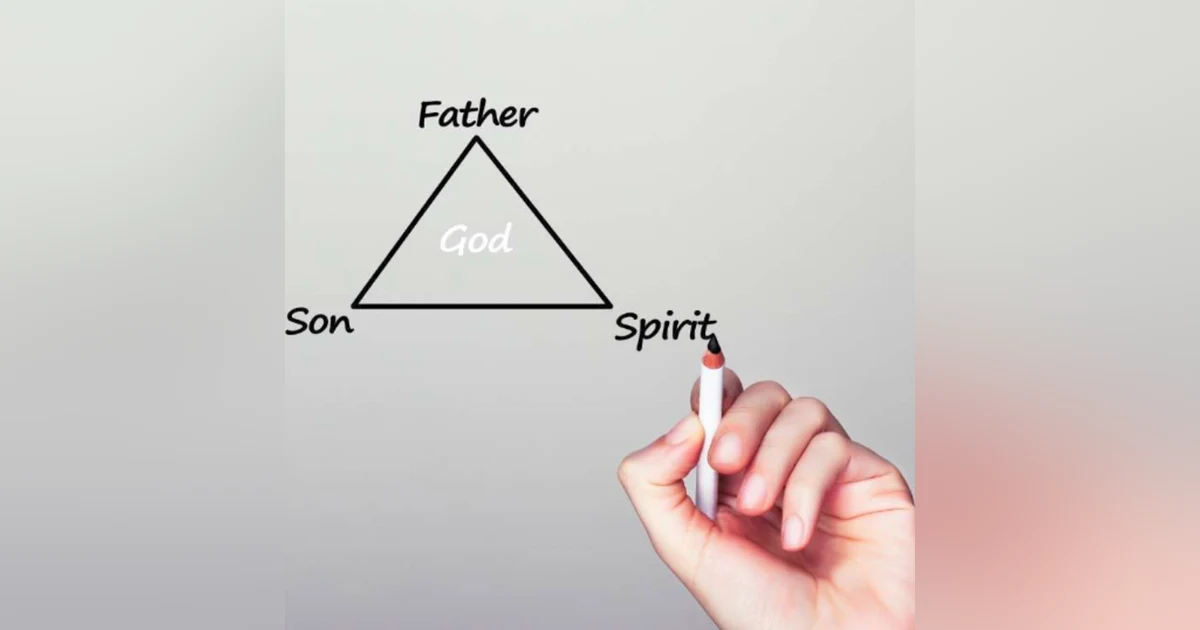


How does the Trinity concept help harmonize faith with science?
In Paper 104 from the Urantia Book, we learn about the Trinity Concept and how the functionality of Trinity aids us in understandng how God can both a personal loving spiritual father, at the same time can also be the primal energy source of an entire universe.
0:01 Well, I hope you're doing great. Thank you again. Another episode of the Rancho Radio podcast and I want to talk about the Trinity. It's I don't think I've ever talked about the Trinity. It's from what I've been reading on Paper 104 and there's a lot of good Nuggets in that, even though it's a very challenging section of the book. If you notice in Part 3, as it goes through the entirety of Part 3 of the Urantia book, it gets a little bit more complicated and more complex up to the point where they're talking about a lot of things that it, it literally takes years to try to grasp and the use of language is unbelievable.
0:44 But they get to the part about the Trinity. And what I've always found interesting is that most religions in my own experience about the Trinity is that people don't know or that they, they say God the Father, God the Son and God the Spirit. And in Catholicism, that's it's very prevalent in Catholicism, but not so much in other branches of Christianity. Like you won't hear a lot about the Trinity, I don't think in a Baptist Church or in in in in a lot of Middle Eastern religions Trinity is expressed through triune concepts, particularly in Hinduism. So I've not really paid too much attention to the Trinity concept, although I I think I understand it more because I read the Urantia book and I understand the relationship between God the Father, God the Son, and God the Spirit.
1:37 This particular paper is very interesting and I want to pull out some really good notes about it. And I think you'll have a better appreciation of it too. Once we go through it. It won't be a very long episode, but it's got a lot of good interesting insight as to the nature of God. So we'll continue in just a second here. And I, I want to welcome you into the Your Rancher Radio podcast.
2:34 So the first question that people will naturally ask is why is the Trinity concept important? And in paper one O 4 of the Urantia book, they explain why. And let me roll through some of the more important comments and paragraphs, and then we'll weave together the the context in which we could discover the answer why the Trinity concept is such an important concept in Christianity and indeed in understanding the relationship of God. So it starts out with, it's always difficult for an emerging monotheism to tolerate Trinitarianism when confronted by polytheism. The Trinity idea takes best hold of these religions, which have a firm monotheistic tradition coupled with doctrinal elasticity.
3:27 The great monotheists, the Hebrews and the Muhammadans found it difficult to distinguish between worshipping 3 gods, polytheism and Trinitarianism, the worship of 1 deity existing in a triune manifestation of divinity and personality. Now Jesus taught his apostles the truth regarding the persons of the Paradise Trinity, but they thought he spoke figuratively and symbolically. Having been nurtured in Hebraic monotheism, they they found it difficult to entertain any belief that seemed to conflict with the dominating concept of Yahweh.
4:07 And the early Christians inherited the Hebraic prejudice against the Trinity concept. And this goes back to what I was saying a moment ago about how in some factors or some traditions of Christianity, there's a stronger presence than others of the Trinity concept. Paul knew of the Paradise Trinity of Father, Son, and Spirit, but he seldom preached about it and made mention thereof in only a few of his letters to the newly forming churches. Even then did his fellow apostles. Paul confused Jesus, the Creator, Son of the local universe, with the second person of deity and the eternal son of paradise. Now over the years of my discussions with fellow Christians about the Urantia book, they get a little upset when I say to them, no, Jesus is not the second person of of Trinity.
5:02 So I know by experience that there is some a little bit of consternation on Christians when they read about the second person of deity and the difference between that and say, the Creator's Son, which is of course Michael, who is Jesus. Now, not since the times of Jesus has the factual identity of the Paradise Trinity been known on Urantia, except by a few individuals to whom it was especially revealed until its presentation in these revelatory disclosures. Now that that sentence right there should jump out at you, because what the revelators are telling us is that one of the key revelations that is coming out of this particular book, the Urantia book, is a clear and precise of of explanation of what the Paradise Trinity is and why it is an important evolutionary step in religious thought.
6:01 They go on to say that the conceptual grasp of the Trinity association of the Father, the Son and Spirit prepares the human mind for the further presentation of certain other threefold relationships. So think of it this way, the the idea of a loving Father is not exactly correlated with the idea of a deity force. At least without the concept of understand of understanding how God operates in this realm. How can he be a loving personal father who has his hands in all of our human affairs, but by the same time have a universe that operates under physical laws and in some degree of order?
6:53 And this is a stumbling block for a lot of people when they try to understand the concept of a spiritual father who was also the upholder of all things physical gravity and everything else, energy, force. And the two ideas do not commensurate so well, unless you have the Trinity concept. And that's why they're introducing it in in more clarity in these Urantia papers. But and I'd never seen that sentence before the sentence saying until the Trinity concept. This is the next attempt to explain Trinity to human beings in these tarantula papers.
7:39 So let's continue on. Theological reason may be fully satisfied by the concept of the Paradise Trinity or even a personal all loving deity. But philosophical and cosmological reason demand the recognition of the infinite functions in various non father capacities of universal manifestation, including the relationships of the God of force, energy, power, causation, reaction, potentiality, actuality, gravity, tension, pattern, principle and unity.
8:20 What is the unifying force of all of these anticipants of the material world or the material universe? And again I go back to you. It's hard for many people to understand that a personal God can at one and the same time also be a God of force and energy. And this is perhaps why Trinity introduces and bridges these. It harmonizes these two concepts through the function of the Trinity that make any sense. They go on to write. Mortal man is passing through a great age of expanding horizons and enlarging concepts on Urantia, and his cosmic philosophy must accelerate in evolution to keep pace with the expansion of the intellectual arena of human thought as as the cosmic consciousness. He perceives the interrelatedness of all that he finds in his material science and is and in his intellectual philosophy and is his spiritual insight. So could it be that the Trinity concept actually helps bring these three arenas of reality into cohesion? I'm asking you the Trinity, as it exposes the relationship between God the Father, God the Son, and God the Spirit, then allows us to make that connection between the material, the morantial, and the
9:51 spiritual. They go on to say, still, with all this belief in the unity of the cosmos, man perceives the diversity of all existence. In spite of all concepts concerning the immutability of deity, man perceives that he lives in a universe of constant change and experiential growth. The Trinity provides the context by which Deity can be seen manifest as both personal as well as in functional unity. That is my interpretation, so I'll say it again. The Trinity provides the context by which Deity can be viewed or manifested as both personal as well as in functional unity.
10:40 God is both omnificent and distributive through the understanding of the Trinity relationship of God the Father, God the Son, and God the Spirit. So God is both love and law, merciful and just, impersonal in energy and force, but also qualitative and deeply loving as a personal being, even the source of all that is energy and especially all that is personality. You know, one of the things that I like, one of the attributes that I like and appreciate about the Oranga book, it how how it does harmonize the three great realities of our experience, our material world, our intellectual space and our spiritual aspirations, things meaning, value. And I hope that some of what I shared with you from Paper 104 helps you to have a better idea of the concept of the Trinity and how it relates to not only a God of energy and a God of force, but also a God of love and mercy. And these are the things that Jesus spoke about. So we'll see you again soon on the Urantia Radio podcast. And of course, any questions or comments, always feel free to reach out.
12:05 The e-mail address is urantiabookradio@gmail.com and it's been a pleasure to be with you and I look forward to our next get together.