On War
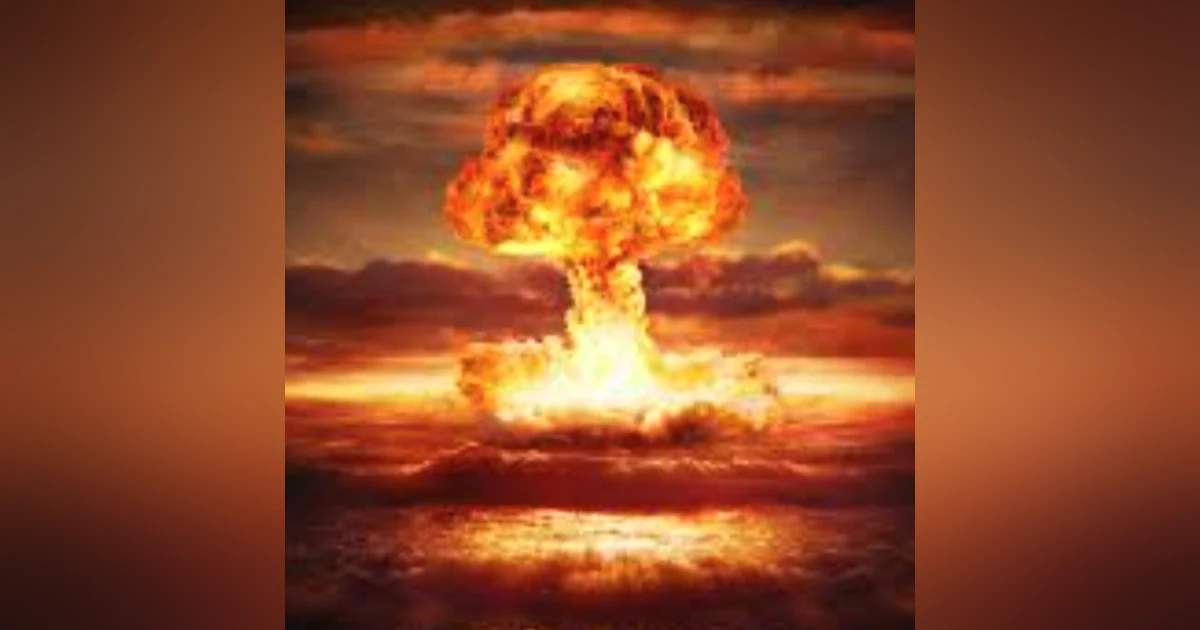


The Urantia Book tells us much the genesis of war and why it persists. It is also thoroighly explains why it must be abandon. It's wirht a good rview of Paper 70 and its first two sections on War.
0:00 Well, we're together again and thank you so much for tuning into the Urantia Radio Podcast. My name is Jim Watkins. I've been reading the Urantia book since 1982 when I was 19 years old. Before that I was a happy go lucky Christian and I was off on my new life just getting into my career and reading the Urantia book. And it took it with me everywhere I went across the great country that I live in. And so I like to share and talk about this revelation and we will. And often times I don't like to talk about current events for the simple reason that if I talk about something that's happening today, the episode will be around for years.
0:43 And sometimes it won't make sense if you're listening to me say 2 years from now and you're hearing me talk about something that's come and gone. But I think with the tensions that are rising in the Middle East, everybody is rightfully nervous, worried about it because it could be biblical. It could be of, you know, prophecy. A lot of people holds a prophecy and that these may be a dispensation of some kind. But there's no doubt that Israel and Iran have been at this for a long, long time. What makes this different, obviously, is the nuclear element, the fact that Iran is enriching uranium, and rightfully, because, you know, there's just a little history, back when Libya was run by Moammar Gaddafi, he had nuclear weapons and he agreed to give them up.
1:39 And then he got killed by Americans to the lesson that the Ayatollah Khamenei is, well, we got to have nuclear weapons, otherwise America will just take over. And so that's led. And also not to mention, I don't want to downplay this at all, but Iran has been a sponsor of global terror for a long time. They hold to a very extreme version of Islam and they are hell bent on destroying Israel because they believe it is their divine duty to do so. That at least is the culture of the and the mindset of the people who run that country. So it's tense right now and people are nervous about it because it could disrupt everything if the United States gets involved or too involved.
2:32 The repercussions there talk to people a lot who are concerned about terrorists that might be sleeper cells. So it's it's put a lot of people at ease. I myself have I'm I'm not inoculated from this as much as I have faith in the most highs. I also see the the perspective of war and I want to talk about paper 70 in the Arantia book, just the one paper. And even that I'm only going to read maybe two or three paragraphs. And it takes us through the timeline and helps us understand what the mechanism of war is all about and, and how it's been a part of civilization for as long as civilization has existed.
3:15 And we're going to do that in just a minute. So hang on. And I've also got some good news to share with you about other things that I've involved with it you might want to check out. And we'll do all that in just a second. So hang on, You're listening to the Rancho Radio podcast. One of the things that happened recently. Welcome back is that I was able to spend some time with my now friend and his name is Santiago Neeland and he lives in Spain and he does a new podcast and he's heavily involved in this podcast.
4:03 It's all about the Urantia book and all about the Divine within. That's the name of the podcast. And he caught up with me and we did an interview a couple of days ago and he's in post production. And so, you know, in a couple of weeks, go on YouTube and look up the divine within and it might pop up and you'll see my name, Jim Watkins. And we had a nice chat about a lot of different things. And I, I think you'll enjoy it. For those who may not be familiar, I want to give a quick breakdown to how the Urantia book is structured and in sort of my own thoughts on why the book is structured in the way that it's structured. And to me, it, it, it's a timeline.
4:44 If you're moving from left to right, it is a literal timeline of creation, moving from the first original, first source and center and back to before time as we would reckon it. And then you move to the right and now you're moving towards the present day. So the first part of the Urantia book and it's divided into 4 parts and the first part is all about God and paradise and the Trinity and the relationship that the Trinity has to reality as we know it, The Trinity being God the Father, God the Son and God the Spirit.
5:25 And then the second part of the Urantia book, Part 2 really delves into the activities of the local area of space that we live in, which is under the domain of Jesus Christ. And that would be called Nevadon. And before Jesus incarnated as a as a son, as the Son of the Father, the highest representative of the Father's nature that we could possibly experience, he was known as Michael on, on Nebadon or Michael. And Michael is often, or maybe not, maybe there is an Archangel Michael, I don't know. But the Archangel Michael is very much a part of Christology. And the reason is that Michael is Michael of Nebadon. That is his name.
6:14 He is the highest order of sonship in our universe. So when he says he who has seen me has seen the father, he's being absolutely literal. So Part 2 of the Urantia book is about his creation. So now we're moving outward. And then we finally get to Part 3, which is a very exciting part of the Urantia book. And it is called The History of Urantia. And it goes from the beginning of our solar system and the birth of our solar system actually, and it moves outward. And it starts with paper 57. So now you're already 57 papers into this book. And it finally gets to that section where they talk about our early years, how life was established.
7:00 And then it gives a chronological summary of how we went from marine life to the early land life to the mammalian era of our world. And then finally to the appearance of the dawn races of early man pre man. And then it it it comes to the point in paper 63 where it talks about the first human family and what made them truly human. The story of Andon and Fonta and and and let it be known that the Oranga book asserts that evolution is not accidental or causational or repercussional. It is intelligently controlled and guided. We are not an experiment.
7:48 We were planned. And it's important to make that distinction because while it promotes the idea of evolution, it doesn't take away from the creatorship intelligent design foundation of which we base our belief in God. So God has his divine hand interceding and, and, and I know that's hard for people. Oh, well, why would he be doing that? Until you understand the true nature and the size and scope and the depth of deity, it becomes easier to understand when you understand that it's not just him. He has all kinds of divine attributes. He has seven levels of distinct reality that He has the founder of and sponsor of, and we are in just one perspective of that. We are.
8:38 We are at the tail end. We're at the very bottom of that intelligent design. And the part that makes us created in His image is that His actual spirit fragment resides in our minds. That is how we are connected to Him. This is why we can pray to Him, why we can worship, why we commune. So for people who say that religion is completely evolutionary, they would be wrong. There is a divine hand. There isn't divine. There is divine and, and guess what? You're part of it. Whether you agree with it or not, you are a part of that plan. And so in the paper of, of, of the history of Urantia, it, it takes us through the early stages of the human family.
9:23 Then it addresses the different sort of offspring of the evolutionary races of color. There was there were variants introduced about 1/2 a million years ago and human beings evolved to a slightly higher level. Then it talks about the over control of evolution and then at that point it it it goes to about 500,000 years ago and what has has has happened since. So now we're in paper 67, for example, or 66, and we talk about the era right after the appearance of the colored races. Then they get into the dawn of civilization where these various tribes that started to appear and populate the earth, the early period of of how we invented things, our cultural traits, why we worship, what did we worship? It takes us through a whole period so that we better understand our early beginnings, much of it lost, by the way, and yet to be discovered by archaeology. And then they start to address to us about primitive human institutions.
10:32 And for example, when you think about the different institutions, the dawn of industry, the specialization, specialization of Labor, the beginnings of trade between the tribes, the beginnings of capital, where you have people who have wealth because they produce. And then it talks about fire and fire in relation to civilization, which is interesting. You should read that sometime. It's Paper 69, section 6. Then it talks about the utilization of animals. And if you think about these are all just slices. These are evolutionary gradations of development towards a more progressive society, which is what we have today. It also addresses slavery in early civilization. And then it talks about private property. And that was really the beginning of a, of more enduring of a type of civilization.
11:32 But I want to talk to you about Paper 70 as it relates to today because in this section we find 2 chapters. 1 is called the genesis of war and the social value of war. And so I'll read to you and I haven't read this probably in a few months. I read it from time to time just to get a, a, you know, a brush up. And it sets the stage on why, why we maybe it'll answer for you and, and me why we're at this stage. So let's begin and you can read along if you want to. Paper 70, the evolution of a human government. We're only going to do 33 papers. No sooner had man partially solve the problem of making a living than he was confronted with the task of regulating human contacts. The development of industry demanded law, order and social adjustment.
12:26 Private property necessitated government. On an evolutionary world, antagonisms are natural. Peace is secured only by some sort of social regulative system. Social regulation is inseparable from social organization. Associations implies some controlling authority and government compels the coordination of the antagonisms of the tribes, clans, families and individuals. Government is an unconscious development. It evolves by trial and error. It does not. It does have survival value. Therefore, it becomes traditional anarchy, augmented misery. Therefore, government, comparative law and order slowly emerged or is emerging.
13:13 The coercive demands of the struggle for existence literally drove the human race along progressive roads to civilization. So because we desire law and order or because we like to be safe, we created law and order, we created government. We we put power in people's hands to regulate so that the the what is it? The lesser angels of our nature don't dominate. Because if you have a Society of savages and they never civilize, then you have no society. It, it, it is a perpetually in disarray. And mankind, because of intelligence demanded something more.
13:55 That's what that first paragraph is saying, the genesis of war. This is section one from the same paper. 70 War is the natural state and heritage of evolving man. Peace in the Social Yardstick Peace is the social yardstick measuring civilizations Advancement Before the Before the partial socialization of the advancing races, man was exceedingly individualistic, extremely suspicious, and unbelievably quarrelsome. Violence is the law of nature, hostility the automatic reaction of the children of nature, while war is but the same activities carried on collectively.
14:40 And whenever and wherever the fabric of civilization becomes stressed by the complications of society's advancement, there is always an immediate and ruinous reversion to these early methods of violent adjustment, of the irritations of human interassociation. War is an animalistic reaction to misunderstandings and irritations. Peace attends upon the civilized solution of all problems and difficulties. The Sangak or colored races, together with the later deteriorated Adamites and Nodites, were all belligerent. The Andonites.
15:22 These are first Andon and Font of the first human family were early taught the Golden Rule, and even today their Eskimo descendants live very much by that code. Custom is strong among them and they are fairly free free from violent antagonisms. Interesting note about the Eskimos, or what we call today the Inuit. And on taught his children to settle disputes by beating a tree with a stick, meanwhile cursing the tree. The one whose stick broke first was the the winner, the victor. The later Andonites used to settle disputes by holding a public show at which the disputants made fun and ridiculed each other, while the audience decided the winner by its applause. But there could be no such phenomena as war until society had evolved sufficiently far to actually experience periods of peace and to sanction warlike practices. The very concept of war implies some degree of organization. With the emergence of social groupings, individual irritations began to be submerged in the group feelings, and this promoted inter tribal tranquility, but at the expense of inter tribal peace.
16:42 Peace was thus first enjoyed by the in Group or tribe who always disliked and hated the out group foreigners. Early man regarded it as a virtue to shed alien blood, but even this did not work at first. When the early chiefs would try to iron out misunderstandings, they often found it necessary at least once a year to permit the tribe stone fights. The clan would divide up into two gangs or groups and engage in an all day battle. And this for no other reason than just the fun of it. They really enjoyed fighting. Human beings really enjoy the fight.
17:25 This is why I say that the sports like football or hockey, basketball, they've, they've we in the West to harness our energy soccer so that professional sports takes the place of war because we like doing this kind of thing. Warfare persists because man is human, evolved from an animal, and all animals are bellicose. Among the early causes of war were hunger, women's scarcity, vanity, slaves. Revenge was the motive for war when one tribe believed that a neighboring tribe had caused the death of a fellow tribesman.
18:08 That still goes on today. Mourning was continued until the head was brought home. The war for vengeance was in good standing right on down to comparatively modern times. Another reason for war recreation. War was looked upon as recreation by the young men of these early times. If no good and sufficient pretext for war arose when peace became oppressive, neighboring tribes were accustomed to go out in semi friendly combat, to engage in a foray as a holiday, or to enjoy a sham battle. Religion #7 The desire to make converts to the cult.
18:52 The primitive religions all sanctioned war. Only in recent times has religion begun to frown upon war. The early priesthoods were unfortunately usually allied with the military power. One of the great peace moves of the ages has been the attempt to separate church and state. Always these olden tribes made war at the bidding of their gods, at the behest of their chiefs or medicine men. The Hebrews believed in such a God of battles and the narratives of their raid on the Midianites is a typical recital of the atrocities cruelty of the ancient tribal wars. This assault, with its slaughter of all the males and the later killings of all male children and all women were not virgins, would have done honor to the morays of a tribal Chieftain of 200,000 years ago.
19:50 And all this was executed in the name of the Lord God of Israel. This is a narrative of the evolution of society, the natural outworking of the problems of the races, man working out his own destiny on earth. Such atrocities are not instigated by deity. Notwithstanding the tendency of man to place the responsibility on his gods, military mercy has been slow in coming to mankind. Even when a woman Deborah, ruled the Hebrews, the same wholesale cruelty persisted. Her general in his victory over the Gentiles. Cause quote all the hosts to fall upon the sword, and there was not one left in quote.
20:37 Very early in the history of the race, poisoned weapons were used. All sorts of mutilations were practiced. Saul did not hesitate to require 100 Philistine foreskins as the dowry. David would should pay for his daughter Michael. Early wars were fought between tribes as a whole, but in later times when 2 individuals and different tribes had a dispute, instead of both tribes fighting, the two disputants engaged in a duel. It also became a custom for two armies to stake all on the outcome of a contest between a representative chosen from each side, as in the instance of David and Goliath. The first refinements of war was the taking of prisoners. Next women were exempted from hostilities and then came the recognition of non combatants.
21:29 Military casts and standing armies soon developed to keep pace with the increasing complexity of combat. Such warriors were early prohibited from associating with women, and women long ago ceased to fight, though they have always fed and nursed the soldiers and urged them on to battle. The practice of declaring war represented great progress. Such declarations of intention to fight betoken the arrival of a sense of fairness, and this was followed by the gradual development of the rulers of civilized warfare. Very early it became the custom not to fight near religious sites, and still later not to fight on certain holy days. Next came the general recognition of the right of asylum.
22:18 Political fugitives received protection. Thus did warfare gradually evolve from the primitive manhunt to the somewhat more orderly systems of the latter day civilized nations. But only slowly does the social attitude of amity displace that of anonymity. So let us take a moment, take a collective breath, and we'll continue on with the next section of this engaging paper on the social value of war. All right, so now we want to read on to the section of this book where it talks about the social value of war. Now, in past ages of fierce war would institute social changes and facilitate the adoption of new ideas such as would not have occurred naturally in 10,000 years. The terrible price paid for these certain war advantages was that society was temporarily thrown back into savagery. Civilized reason had to abdicate. War is strong medicine, very costly and most dangerous. While often curative of certain social disorders, it sometimes kills the patient, destroys the
23:50 society. The constant necessity for National Defense creates many new and advanced social adjustments. Society today enjoys the benefit of a long list of useful innovations which were at first holy military, and even is indebted to war for the dance, one of the early forms of which was a military drill. War has had a social value to past civilizations because it #1 impose discipline and enforced cooperation #2 put a premium on fortitude and courage #3 fostered and solidified nationalism, destroyed weak and unfit peoples, dissolve the illusion of primitive equality and selective, stratified society. And war has had certain evolutionary and selective value, but like slavery, it must sometime be abandoned as civilization slowly advances.
24:51 Olden wars promoted travel and cultural intercourse. These ends are now better served by modern methods of transport and communication. Olden wars strengthen the nation's, but modern struggles disrupt civilized culture. Ancient warfare resulted in the decimation of inferior peoples. The net result of modern conflict is the selective destruction of the best human stocks. And I take that if you think about the number of people that died in World War One and World War Two, you begin to realize how many human beings were wiped off the face of the earth in such a short amount of time. Where?
25:32 And even onward through the 20th century and communism in China, hundreds of millions of people, or at least 100 million people, have been killed off that that's sobering. Early wars promoted organization and efficiency, but these have now become the aims of modern industry. During past ages, war was a social ferment which pushed civilization forward. This result is now better attained by ambition and invention. Ancient warfare supported the concept of a God of battles, but modern man has been told that God is love.
26:13 War has served many valuable purposes in the past. It has been an indispensable scaffolding in the building of civilization, but it is rapidly becoming culturally bankrupt, incapable of producing dividends of social gain in any way commensurate with the terrible losses attendant upon its invocation. At one time physicians believed in bloodletting as a cure for many diseases, but they have since discovered better remedies for most of these disorders, and so must the international bloodletting of war certainly give place to the discovery of better methods for curing the ills of nations. The nations of Urantia have already entered upon the gigantic struggle between nationalistic militarism and industrialism, and in many ways this conflict is analogous to the age long struggle between the herder hunter and the farmer.
27:15 But if industrialism is to triumph over militarism, it must avoid the dangers which beset it. The perils of budding industry on Urantia are #1 The strong drift towards materialism. Spiritual blindness #2 The worship of wealth, power, value distortion 3 The vices of luxury. Cultural immaturity #4 The increasing dangers of indolence. Service insensitivity #5 The growth of undesirable racial softness. Biological deterioration, and number six, the threat of standardized industrial slavery. Personality stagnation, labor is ennobling, but drudgery is be numbing.
28:02 Now I'll I'll just put this out there that those six points very much reflect many of the problems and the social ills that we have. I interviewed A historian not long ago on another program, a gentleman by the name of Anton Chaikin. Chaikin, That's right. And he has done extensive reporting on the history of war. And he claims that today's war are driven by industrialists, bankers, people who have a vested interest and they don't really give a damn about moral or human rights. They're in it for, they're in it to win it. And so and they've become more secular in their outlook and they tend to think along globalist lines, like we can control humanity under our terms.
28:51 And so look at the the perils of budding industry. Budding industry is what we have now. We have corporatocracies, we have mega companies that that have such an influence on our day-to-day life. And the perils of these kinds of organizations are in fact, the strong drift towards materialism, spiritual blindness, the worship of wealth, power and value distortion. These billion dollar companies America made, produced, I read 100 No 1000 new millionaires in the year 2025. All right. Not that there's anything wrong with being a millionaire, mind you, but the but it tends to, I mean, when you want to talk about the worship of wealth, power, and then of course, the vices of luxury and cultural immaturity.
29:43 So these are just telltale signs of what's driving war today is not the same as what drove it in the past. All right, let me continue on. Militarism is autocratic and cruel savage. It promotes social organization among the conquerors but disintegrates the vanquished. Industrialism is more civilized, and it should be carried on so as to promote initiative and to encourage individualism. Society in every way should should foster originality. Do not make the mistake of glorifying war. Rather discern it for what it is done for society, so that you may the more accurately visualize what its substitutes must provide in order to continue the advancement of civilization. And if such adequate substitutes are not provided, then you may be sure that war will long continue. Man will never accept peace as a normal mode of living until he has been thoroughly and repeatedly convinced that peace is best for his material welfare, and until society has wisely provided peaceful substitutes for the gratification of that inherent tendency. Periodically to let loose a collective Dr. designed to liberate those ever accumulating emotions and energies belonging to the self preservation reactions of the human species. But even in passing, war should
31:15 be honored as the school of experience which compelled a race of arrogant individualists to submit themselves to highly concentrated authority. A chief executive old fashioned war did select the innately great men for leadership, but modern war no longer does this. To discover leaders, society must now turn to the conquests of peace, industry, science and social achievement. That concludes that Section 2 of Paper 70 and those two chapters, I think are much needed in contemplation these days. There's a lot to be learned for the revelators on this one, and I would remind you that the author of this particular paper is none other than a Melchizedek of Nebadon and Melchizedeks and the family of things should be considered older brothers, just like Melchizedek taught Abraham monotheism during the times of of his reign.
32:22 And Abraham founded, went on and founded the Hebrew religion in which Moses exemplified and carried down to the modern day. So the same nature of being that instructed Abraham and spawned the many great religious leaders of of the subsequent ages is of the same order, the order of Melchizedek, who wrote this paper that I just presented to you. So our time has come. We'll have more episodes. I'll look forward to our next get together. In the meantime, be safe and be of good faith and be of good cheer. Thanks again for joining me and please share these podcasts with fellow truth seekers. We're growing. We've done so well.
33:05 We're approaching 200,000 people who have heard these podcasts and I'd like to see that number grow and I appreciate you stopping by. Until next time, be of good cheer.