John The Baptist

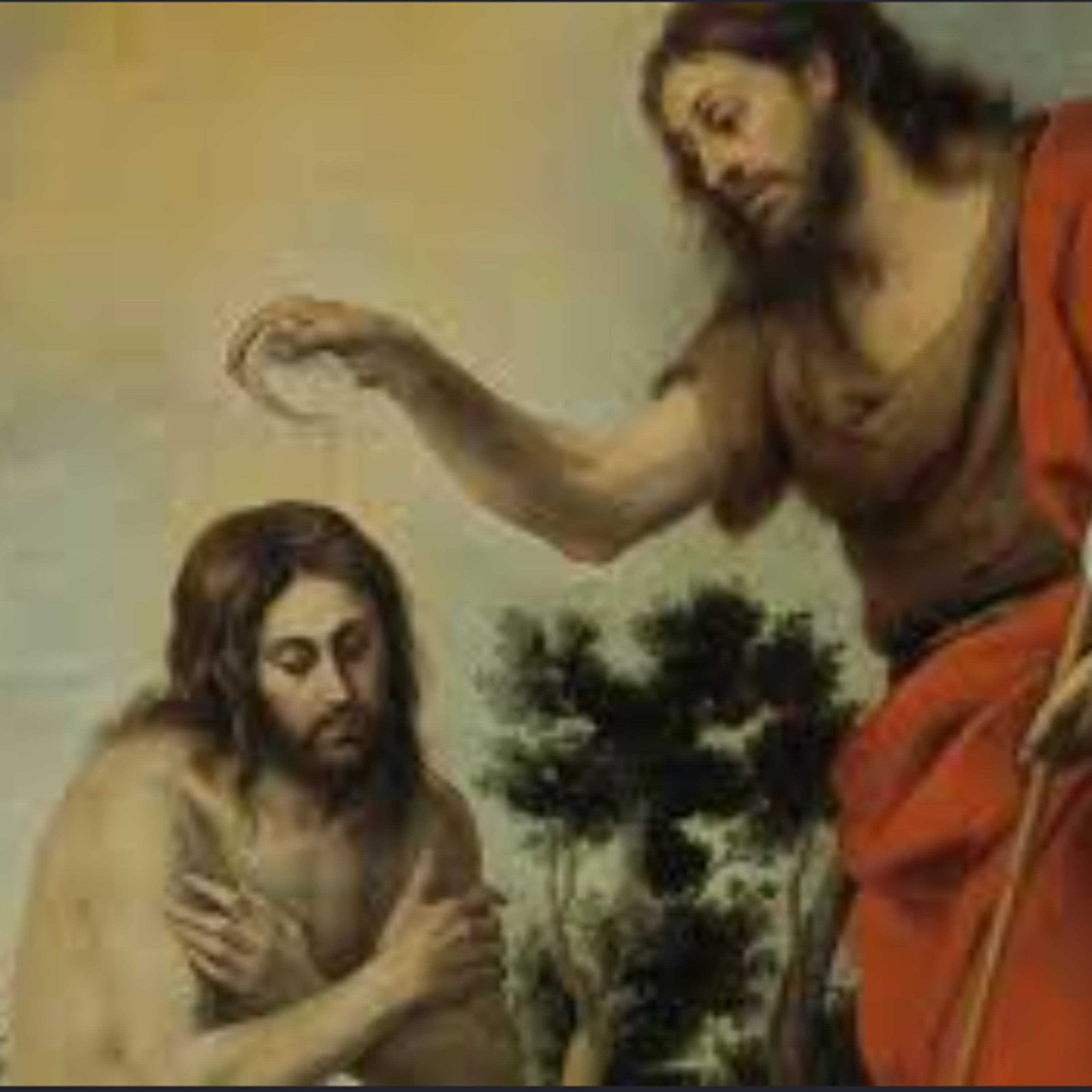


Who was John the Baptist, and how was his life different from nearly any other mortal in history? Yet ,few really understand the life of this Prophet, the last of the ages, and herald to a new world order. This child of promise paved the way for the Son of Man, but it was at great cost, as we learn from Paper 135.
0:03 Welcome to the Urantia Radio Podcast. It's good to have you back. So let's get right to it. This is the program about the 5th epical revelation that I fondly referred to as the Urantia Book, along with about a million other people on the planet and I ran across. We're going to talk about a few things. One is an upcoming project that I'm I'm developing out and I'm going to ask for your assistance with it and we'll get to that in a little bit. I think you'll be blown away by it. I think I am profoundly driven to get this done and I've already started the process and I'll share that with you in a little while and I know you're going to get excited about it. The other thing too is I, I ran across a really cool video. I wanted to see what your rancher book readers were doing online.
0:46 This guy, Michael Hanna, he did a great presentation at the RVML Resource Center in Ashland, OR, and I guess this was when not long ago because I hadn't seen it before. Anyway, he was at the Rogue Valley Metaphysical Library in Ashland. Rogue Valley. It's really pretty place actually. Michael's got a great YouTube out. It's called What is the Urantia book? Michael Hanna and I want to play a clip from it. This is just a little bit of him talking about the book. This is This is Michael Hanna and a little bit about his introduction to the Urantia book. No human takes credit for writing the book, and after you look at it, you could see that it would be impossible for somebody to say they wrote this book.
1:34 Not just the exquisite language itself, but the coordination of science, philosophy, religion and integrated really a treasury of spiritual truth, intellectual wisdom, and an enhanced point of view perspective on who we are, why we're here, where we're going, the big the big questions. Now I'll say that's a little snippet we might play a little bit more Michael Hanna. Hanna, what is the Urantia book presentation that is up on YouTube and getting some good response too. And again, maybe one day we could have Michael on the program and he could talk about his experiences as well. And Speaking of which, I want to, I want to plug the folks over at CFU Center for Unity.
2:27 They're doing some incredible things with the Urantia book. I was on with Rick Lyon, who's part of the team, along with Gabriel and a whole slew of wonderful people that have come on this program to talk about their projects. And they've got some exciting projects underway. And I really feel like they, they have struck a note with taking the Urantia book and, and trying to move it a little bit closer to mainstream through their efforts and the harnessing of social media. I, I love, I love what I'm seeing. It's just nice, you know, because 20 years ago you didn't see anything.
3:09 There was no social media. So if there's one thing that's good about social media and the Internet is that it works as a great delivery system for the Urantia book. As as someone said to me yesterday, while traditional and mainstream religion is taking a hit a little bit, the people are still looking for meaning in their life. And they get it by learning about Christ and they, and they get it about the Urantia book and what the Urantia book message is, which is that we're not alone. And, and angels and God and all of those agencies that we don't see are behind the scenes working on our behalf.
3:56 And it's for their benefit as well. We're all working for Michael, as Diane Labrecque would say, team Jesus. It's all about team Jesus, right? But it's Jesus from a whole new perspective. In fact, I, I want to, I want to read to you something from the paper that I read this week that was somewhat profound and I want to share with you. So it's from it's when Jesus is first talking. The the Apostolic core had just been formed, 1212 men now surrounding Jesus as he begins his public tour. But prior to that he's training them on on on the new vision of the Kingdom. And the quote is as follows.
4:39 On the day of the week, January 19th 8027, Jesus and the 12 apostles made ready to depart from their headquarters at Bethsaida. The 12 knew nothing of their Masters plans except that they were going to go up to Jerusalem to attend the Passover feast in April and that that was the intention to journey by way of the Jordan Valley. They did not get away from Zebedee's house until near noon because the families of the apostles and others of the disciples had come to say goodbye and wish them well and the new work they were about to begin. Just before leaving, the apostles missed the Master, and Andrew went out to find him. After a brief search, he found Jesus sitting on a boat down at the beach, and he was weeping.
5:25 The 12 had often seen their Master when he seemed to grieve, and they beheld his brief seasons of serious preoccupation of mind, but none of them had ever seen him weep. Andrew was somewhat startled to see the Master thus affected on the eve of their departure for Jerusalem, and he ventured to approach Jesus and ask On this great day, Master, when we are to depart for Jerusalem to proclaim the Father's Kingdom, why is it that you weep? Which of us has offended you? And Jesus? Going back with Andrew to join the 12 answered him. No one of you has grieved me.
6:06 I am saddened only because none of my family, my father Joseph's family, have remembered to come over to bid us Godspeed. At this time, Ruth was on her visit to visit visit her brother and brother Joseph at Nazareth. And this time Ruth was on a visit to her brother Joseph at Nazareth. Other members of his family were kept away by pride, disappointment, misunderstanding, and petty resentments indulged as a result of hurt feelings. It's an interest, interesting, personal, dynamic Jesus having and expressing. But think about the Son of Man, the Son of Man weeping because of a very personal feeling, the feeling of abandonment by family, even his mother and I just that just kind of caught my eye because the what gets lost sometimes is we forget about the human Jesus.
7:10 The other thing that's striking about this paragraph because it's again right at the beginning of the public preaching, John the Apostle asked Jesus, master, what is the Kingdom of heaven? And Jesus answered, the Kingdom of heaven consists in three essentials. First, recognition of the fact of the sovereignty of God. Second, belief in the truth of sonship with God. And 3rd, faith in the effectiveness of the supreme human desire to do the will of God to be like God. And this is the good news of the gospel, that by faith every mortal may have all of these essentials of salvation.
7:54 And now the week of waiting was over, and they prepared to depart on the Morrow for Jerusalem. So that's from Paper 140. So some anecdotes I read today in the thought to ponder that still the greatest thing that a human being can observe is the life and teachings of Jesus while still in the flesh. So there's a project on my mind and I'm debating whether or not I'm, I'm going to trust that I'm going to do the right thing by sharing it with you. And what I hope I get out of this is feedback, because I think this could be something that's been noodling around in my mind for quite a few years, actually.
8:43 And it's about John the Baptist. John the Baptist is a hero in my opinion, but yet he is not really much of A figure either in Scripture or in the Gospels. They hardly ever mention him, but his is the essential story of faith by fire. He unlike most human beings, in fact almost every human being ever born on this planet. Of all of those human beings, you could argue that John was the only human being where his life was predestined. It was preordained even six months before he was born. He was still a fetus inside the womb of Elizabeth who was advanced in age and probably shouldn't have been having a child by any normal circumstances. It is described in the Urantia book as a holy natural event that there was nothing supernatural about his birth other than the fact that it came about by natural circumstances through Zacharias, who himself was advanced in age, and his wife.
10:02 And it was why Zacharias was so doubtful when his wife told him that she had been told she was going to be giving birth to a son of Promise, a great son of promise. And he was told Jack Zacharias by Elizabeth, that Gabriel, the Angel had visited her and and told her and she didn't know what to do. She was beside herself. It's a great story, Zacharias. Nah, this can't be. But I love my wife. There's no reason why she would lie to me. And then he has this horrific dream and he becomes convinced in the dream that yes, that she is going to have a son and this son is going to be of great promise and he is going to pave the way for the Son of Man to bring light to the world. So even before he gasped his first breath, John the Baptist had his life planned for him.
11:10 But it was not going to be an easy life. It was going to be one of the most difficult lives. But he met it with such courage. And the defining character of John the Baptist was his courage. I mean, he was a brave man. At a very young age. They grew up poor. They had a little farm out on the outskirts of the city of Judah. His father, this the village was so small that the father was sort of like the rabbi of the village, even though he wasn't himself an ordained rabbi. He was actually a Nazarene, I believe. And Nazarenes are just below the the rabbis or the rulers, I don't know.
11:55 They still have it Nazarenes today. So Zacharias Nazarene lived only on the support of the the small group of people that attended his church. Or what do they call those Jewish Shabbats? I guess it'd be what what? Let me ask Siri. Hey, Siri, what do you call a Jewish church synagogue? OK. Yeah. So he so Zacharias lived off the, the whatever the nearby poor people of that age could give. So they lived a pretty paltry position.
12:36 And then at the age of 14, they couldn't or they couldn't ordain their son John because he didn't have the proper education, but he did take the vows of the of the Nazarene priesthood. And at the age of 18, he left home and he went to live and Getty, which is along the the riverfront of one of the offsprings or the, the tributaries of the river Jordan. And, and incidentally, there's a lot of hint dropping of the Dead Sea Scrolls which were found in this same area. And, and they made mention of the, of the scrolls that these Nazarenes studied. And, and So what did, what did John do? He had always in the back of his mind that he was a child of promise, and he knew that Jesus was also that child of promise as well.
13:31 But he couldn't quite figure out how to correlate what he read in Scripture with Elijah from the book of Enoch, I presume, and also Daniel and some of the other prophets, Samuel. And he studied all of these old scriptural accounts of what was to happen in the end times. And he was convinced, John was that those were the end times, that they were living in the deterioration of Rome. He noticed that it was becoming immoral. I mean, it almost sounded like modern day America in a way. He just looked at it and saw the corruptness. He hated the fact that the the Romans were ruling. And he felt, and he actually felt in all of his studies that he was going to help herald in the new and the old was to pass away.
14:29 And he believed in Jesus and he he felt that Jesus was that deliverer, but it didn't mesh with his concepts of the Messiah. And so this is just a brief story of this man who is got a whole chapter dedicated to him in the Urantia book from from birth to death. And he died horrifically, but he never lost his faith. And I think that's a story that people could really appreciate. And I think seeing it on the screen would have such an impact. And I think it could be as important to the discussion #1 Introduces the Urantia Book to the mainstream #2 it tells an incredible story of a man who was preordained. They didn't really have a choice. Oh, I mean, he could choose not to do it. But then, then what?
15:37 And fortunately for us, John the Baptist did pave the way for the reception of of Jesus when Jesus would appear later. But it was a great test of faith. And what do we know in the Urantia Book about the what happened to John? John sits at the table of the 24 elders that are depicted in the New Testament 4 and 20 elders. He is actually the head of that Commission and that Commission is looked upon by all worlds. In fact, the four and 20 elders were appointed by Christ. Michael. That was one of the effects that we talked about after the resurrection. So this is sort of a sort of a encapsulated view and, and I just want to get your opinion.
16:21 Do you think that this, by the way, I've already got the screenplay written and I'm creating, I'm in the process of creating a storyboard and, and as I get closer, I'll start to show you more stuff that you can see online. But for now, I think I, I just, these are the stories I think that are going to capture people and get them to see that the Urantia book is an incredible document and worth all the study that we can give toward it. And just one of many, many stories. And I know that other groups are also doing these kinds of these things, Urantia films and some others, and they do great work. And I'd like to invite you in on the process. And I think I could set up some sort of a situation where if you want to help fund the production of a demo reel and there are people in Hollywood that I could approach, I think we can make it happen.
17:25 And I, and I think in today's atmosphere, people would be looking for something like this, not just science fiction. I mean, Dune is such a great movie because it carries a lot of the, you know, the fact that there are multiple worlds and multiple societies and that there's great technology and, and I think that captures the imagination of young people and it gives them hope and this idea that there is life everywhere, that we're not just the only people. And so chew on that and let me know what you think. And in the meantime, I would just encourage you to read John the Baptist, The story. It's an incredible story and it's so rich and full of inspiring moments, truly.
18:16 In the meantime, thank you again. Share this podcast with your fellow Truth Seeker friends. There are some big events coming up. There are two events of note that I want to share with you. One and there's also an event in Africa that's going on later in the year if you go to urantia.org or Center for unity.org or the fellowship, urantiabook.com and there's very or go to my website. I've got some links up there too, your rancherradio.org. But there's a lot of stuff going on. There's an event in Monterey which is going to be a great event.
18:58 There's the foundation is sponsoring a Zoom event in November. The scientific symposium is coming together. We had Trudy Cooper on a few weeks ago. We could talk to her about the event out in in Colorado. I mean, I'm sorry, Monterey, CA and and so just stay engaged. There's a lot going on in the world today and people are looking for answers and you'd be surprised and maybe even in your life, you've got some people that you're thinking, huh, I wonder if that person is, are they are they open to the truths of the Urantia book? You know, there's a couple of groups that there was an article written in the fellowship, the mini messenger about how Christians today could really benefit from the Urantia book.
19:48 And I'll and I'll tell you why, because a lot of the Christian baggage is is coming home to roost. And what I mean by that is that while Christianity itself remains a progressive, truly the most progressive religion. There are a lot of, well, it just has a lot of baggage. There are a lot of things within Christianity. They're just not consistent. And in many ways the evangelical movement has is ended. I think people are not going to be pulled back. They're not going to be answering the trumpet call to the middle, you know, the Middle Ages. Religion has to be all-encompassing scientifically. It has to make sense.
20:33 And trust me, the idea of an organized universe is more scientific than Mystic because it it would make sense. And scientists are starting to realize that there's some amazing consistencies that indicate intelligent design right in front of us, and we just have to pay attention to that. And today's religion, if it's going to appeal to the human heart, has to has to be intellectually consistent and it has to involve science. It has to make sense to the scientist. And I know that's a tall order, but I believe that the Urantia book answers that call. And This is why the November, I think it's November 18th or 19th and it's going to be a Zoom call. And I believe the foundation is sponsoring it. So just go to urantia.org.
21:26 Till next time I've made the spirit, keep your driving forward and we'll do it all again. Follow me on Spotify and I heart and another. Or you can just go to yourrancherradio.org. Until then, thanks again for stopping by. What is real? What is the meaning of life? What about Jesus? What did he have to say? Also the Is there life after death? Everybody wants to know these questions, and those questions plus many, many more are addressed in the book in full and replete ways. I in this study, in this talk, will only just touch on the surface ray on the ocean, because there's immense depth.


